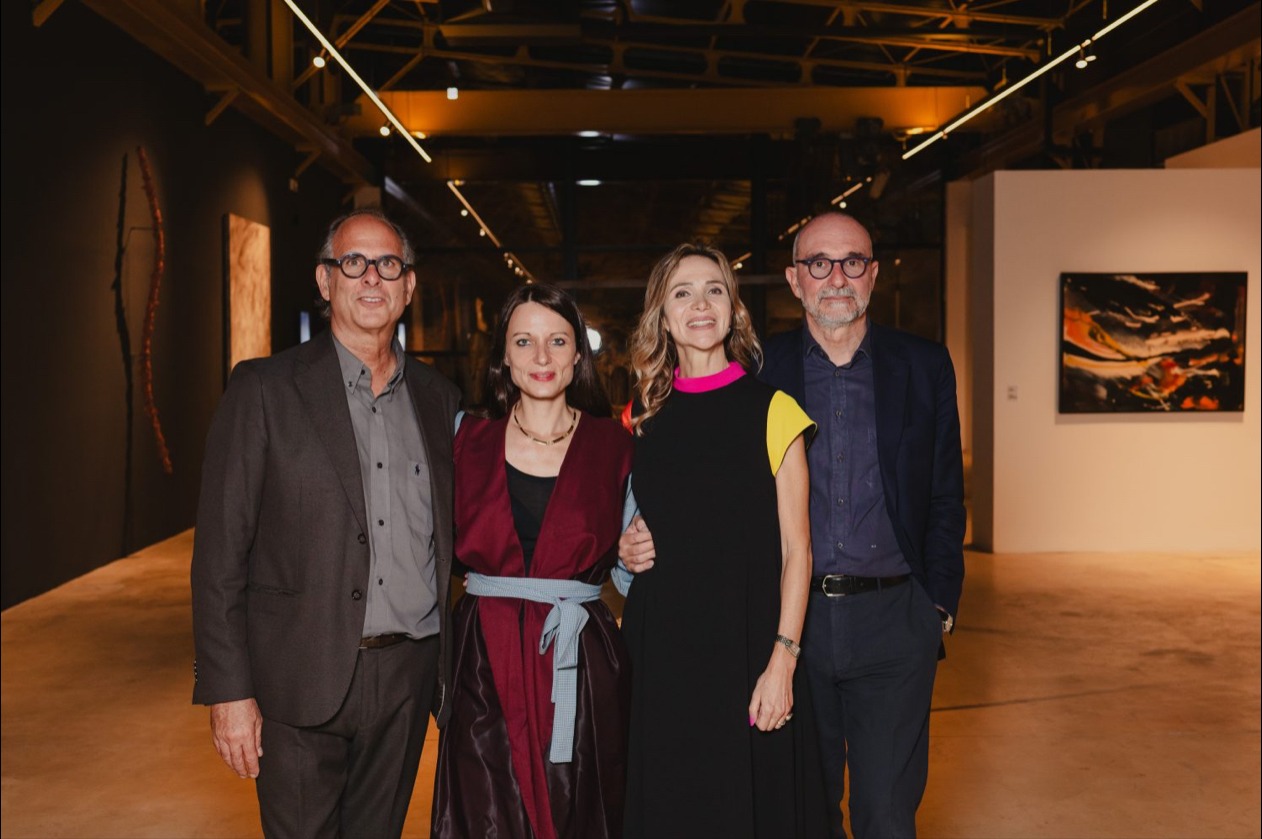
For BackTheBrush Studio Notes, we asked Fabrizio Capolei of Capolei Cavalli how commissioned artwork can shape private, hospitality, and cultural spaces. His answers return to one principle: original art is most powerful when it is born from the architecture, memory, and social life of a place.
Art is not decoration, but a generative element capable of creating relationships.
What changes when original artwork is created for a specific space?
A commissioned or original artwork transforms a space when it is created in dialogue with the architecture, light, function, and memory of the place. Unlike a purchased work placed afterward, a site-specific commission interprets the identity of the environment and becomes an integral part of it.
In the case of the D'ARC Foundation, art is not decoration, but a generative element capable of creating relationships, shaping the visitor's experience, and giving meaning to the spaces.
When does a project deserve a site-specific commission?
A project deserves a site-specific commission when there is a shared vision between client, architect, and artist, and when the place requires an intervention capable of engaging with its history and function.
At the D'ARC Foundation, the transformation of the former industrial workshop required works conceived specifically for that space, able to enhance its memory and establish an authentic connection with the community and urban context.
What makes figurative or classical artwork feel contemporary?
A figurative or classical artwork becomes contemporary when it succeeds in creating a dialogue with the present. In a private home, hotel, or historic space, these works introduce cultural depth, continuity, and memory.
Their contemporary relevance does not depend on style, but on their ability to generate emotion, reflection, and a connection with both architecture and those who inhabit the spaces.
What should emerging artists understand about client collaborations?
Emerging artists should understand that collaborating with a client means entering a process of listening and dialogue. A shared project requires sensitivity toward the place, openness to interdisciplinary exchange, and the ability to interpret cultural, architectural, and social needs.
The artwork is not only an individual expression, but part of a broader vision involving space, people, and territory.
Capolei's answers point to a version of patronage where art is not a finishing layer, but part of the architectural brief itself: a way for clients, architects, artists, and communities to give a place its memory and meaning.
This interview is based on an email exchange; answers have been lightly formatted for length and flow without changing meaning.